
What Are You Really Craving? Food, Alcohol & the Search for Something More with Elizabeth Harris
Oct 19, 2026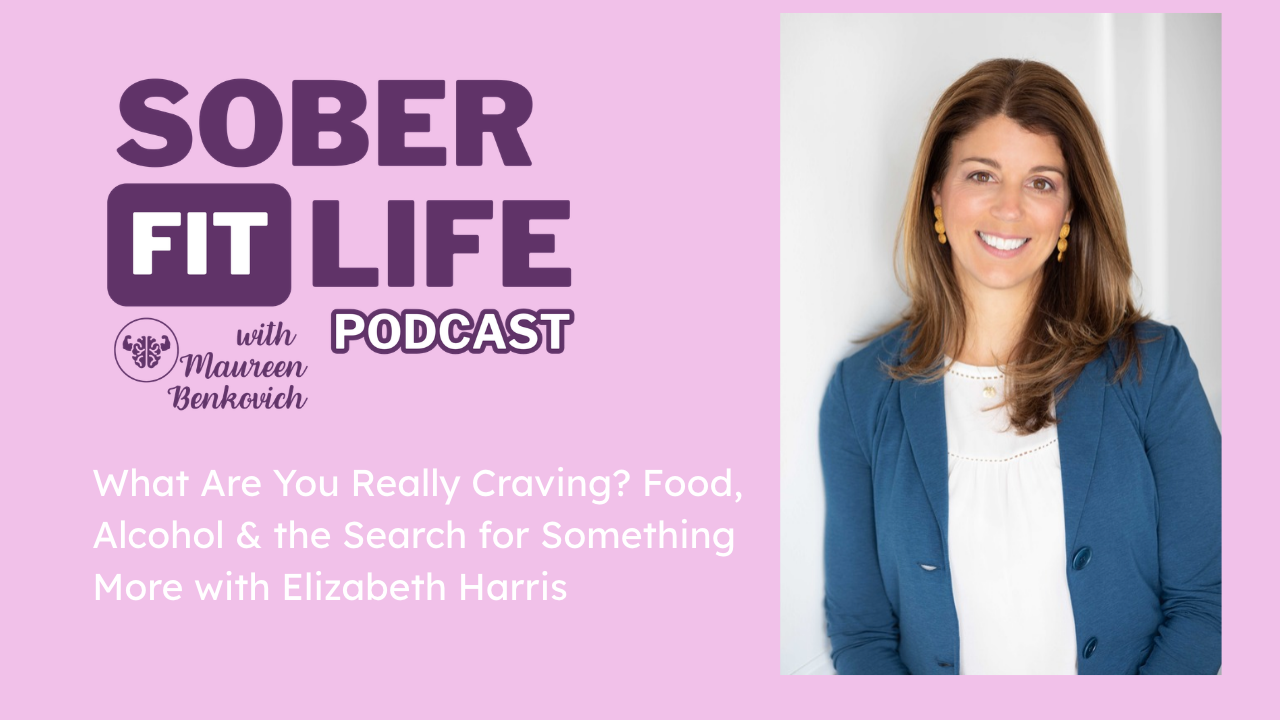
What Are You Really Craving? The Connection Between Food, Alcohol, and Shame
Have you ever noticed that when you try to give something up, you suddenly seem to want it more?
Maybe you've decided to take a break from alcohol, and suddenly you're craving sugar like never before. Or perhaps you've been trying to eat "healthier," only to find yourself obsessing over the very foods you've decided you shouldn't have.
What if the problem isn't a lack of willpower? What if there's something deeper happening?
In this episode of Sober Fit Life, I sat down with Elizabeth Harris, a registered dietitian and certified intuitive eating counselor, to explore the fascinating parallels between our relationships with food and alcohol.
And I kept coming back to one question: What are you really craving?
Why Sugar Cravings Can Show Up When You Stop Drinking
One of the things I see frequently in my alcohol coaching practice is women who take a break from drinking and suddenly experience intense sugar cravings.
Some become so concerned about eating sweets that they start questioning whether giving up alcohol is worth it!
Elizabeth explains that there can be several reasons for these cravings. Alcohol may have been displacing the nutrients and energy your body needs. You may not be eating enough. Or perhaps alcohol was your go-to coping mechanism, and now you're searching for something else to provide comfort or relief.
My response to clients is always to focus on the first domino.
If you're working on changing your relationship with alcohol, you don't have to simultaneously overhaul your diet, start an intense exercise routine, and completely reinvent your life.
Give yourself some grace. Nourish your body. And get curious about what's happening rather than immediately judging yourself.
The Problem with Restriction and Shame
Elizabeth describes how restrictive eating can create a pendulum effect. We deprive ourselves, eventually overconsume, feel guilty, and then return to restriction.
Does that sound familiar?
It's remarkably similar to the cycle many people experience with alcohol.
We make rules about when, where, and how much we'll drink. We break those rules, feel terrible about ourselves, and promise that tomorrow will be different.
But shame rarely helps us move forward.
Elizabeth shared one of my favorite lines from our conversation: "Guilt is not a food group."
I love that because it applies just as much to alcohol.
Instead of asking, "What's wrong with me?" we can ask, "What is this behavior telling me?"
That's where change begins.
Diet Culture and Drinking Culture Have More in Common Than You Think
Another fascinating part of our conversation was how deeply our culture influences our behavior.
Diet culture tells women what their bodies should look like, which foods are good or bad, and what supposedly makes someone healthy.
Drinking culture tells us alcohol is necessary for celebration, relaxation, sophistication, and connection.
Both can leave us chasing an ideal while ignoring what actually feels right for us.
Elizabeth encourages people to practice food neutrality — stepping away from moral judgments about food and learning to understand what their individual bodies need.
And while food and alcohol are fundamentally different — we need food to live — the practice of questioning our assumptions is something both of our approaches share.
What Are You Really Hungry For?
Toward the end of our conversation, Elizabeth explained that there are different types of hunger.
Sometimes we're physically hungry. Sometimes we're eating because it's practical, because we enjoy the taste, or because we're seeking emotional comfort.
All of those experiences deserve curiosity rather than automatic judgment.
And I think the same question can be incredibly revealing when it comes to alcohol.
Are you really craving that glass of wine? Or are you craving permission to relax? A reward after a difficult day? Connection? Relief from anxiety?
When we understand the need underneath the craving, we can begin finding ways to meet that need that genuinely support us.
Reclaiming Your Mental Space
One of the most liberating parts of changing your relationship with food or alcohol is realizing just how much mental energy those old patterns consumed.
The planning. The negotiating. The rules. The guilt afterward.
When you stop constantly battling yourself, you reclaim that space for something better.
And you don't have to figure everything out overnight.
Start by getting curious. Notice your patterns. Practice self-compassion. Ask yourself what is and isn't serving you anymore.
Because the goal isn't to become perfect.
It's to create a healthier, more peaceful relationship with yourself.
🎙️ Listen to my conversation with Elizabeth Harris on Sober Fit Life
Connect with Elizabeth Harris
Elizabeth offers a free quiz called What's Really Driving Your Eating Habits? to help you better understand the thoughts, feelings, and patterns behind your food choices.
💬 Want to learn more about the tools I offer? 👇
