
What If High Cortisol Isn’t Your Problem?
Sep 28, 2026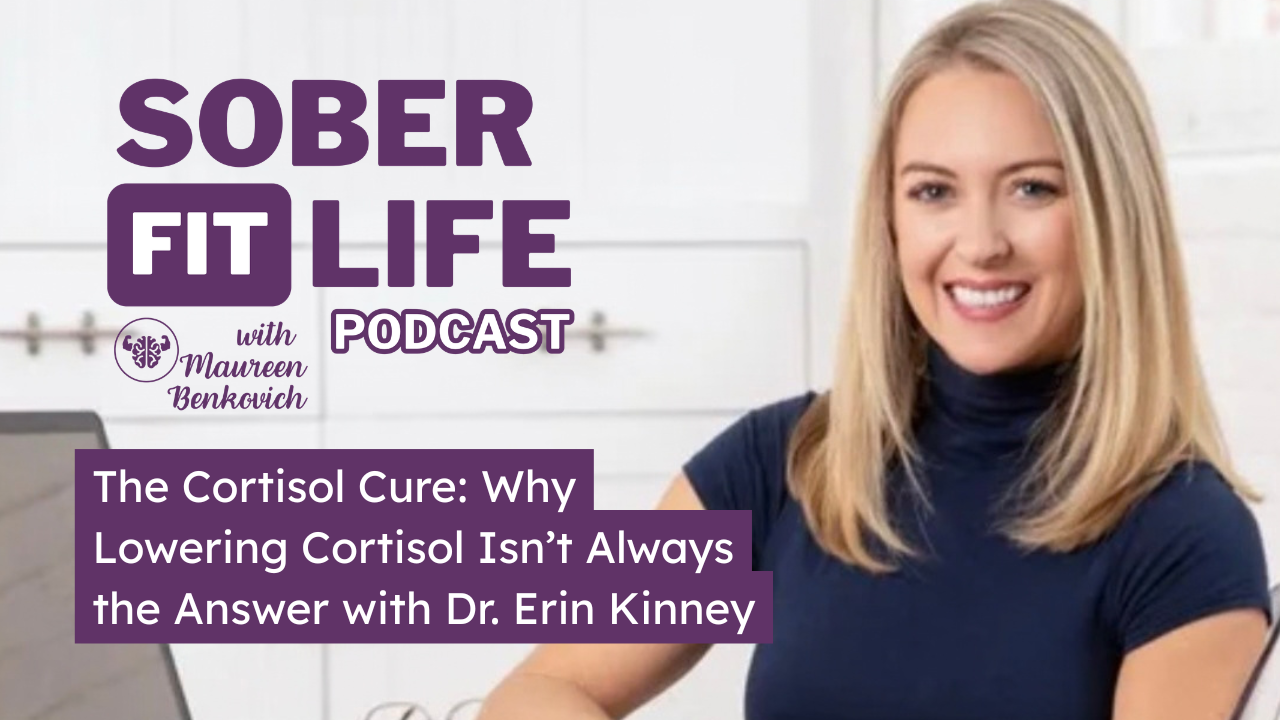
What If High Cortisol Isn’t Your Problem?
If you’re tired all the time, waking up exhausted, feeling wired at night, or struggling with brain fog and mood changes, you’ve probably heard the same advice: You need to lower your cortisol.
But what if that isn’t actually the problem?
In this episode of Sober Fit Life, I’m joined by Dr. Erin Kinney, naturopathic doctor, stress physiology expert, founder of the Kinney Clinic, and author of The Cortisol Cure. I also know Dr. Kinney personally as her patient, so I was especially excited to have her back on the podcast to talk about what cortisol actually does in our bodies, and why it may be getting a bad rap.
One of my favorite concepts from Dr. Kinney’s book is what she calls the Cortisol Bank Account.
Instead of thinking about stress as something we simply need to eliminate, she encourages us to think in terms of withdrawals and deposits.
Work, traffic, exercise, parenting, deadlines, difficult conversations- these all require energy and are withdrawals from the account. But that doesn’t mean they’re necessarily bad. Exercise is a stressor, for example, but it can also be something we love and want in our lives.
Sleep and rest are deposits. So are small moments throughout the day when we activate our “rest and digest” response and give our bodies a chance to come down from that activated state.
The goal isn’t to create a life without stress. It’s to stop continually spending without replenishing.
And those deposits don’t have to mean an hour-long massage or an expensive wellness treatment. Dr. Kinney recommends simple “micro deposits” like taking a few minutes to breathe between meetings, humming, lying down for ten minutes, reading, listening to music, or doing something that genuinely brings you joy.
Of course, I wanted to talk about how alcohol fits into this equation.
So many of us use alcohol because we’re trying to change the way we feel. We’ve had a stressful day, we’re anxious or overwhelmed, and a drink seems like the fastest way to relax.
But Dr. Kinney explains that alcohol can become another withdrawal from that cortisol bank account.
Alcohol can disrupt restorative sleep and affect blood sugar. When blood sugar crashes, the body has to respond to that stressor, potentially interfering with the natural rhythm of cortisol. If this pattern happens repeatedly, you’re not getting the same opportunity to replenish your account through quality sleep.
There’s another piece of this that I think is incredibly important for anyone changing their relationship with alcohol: we have to learn how to relax without it.
If every stressful emotion is followed by a drink, we aren’t giving our nervous system the opportunity to practice calming itself down.
Dr. Kinney describes our stress and relaxation responses almost like two muscles. If we constantly train the fight-or-flight muscle but never train the rest-and-digest muscle, it makes sense that relaxing can feel difficult when we first remove alcohol. But our nervous systems are trainable. We can strengthen that relaxation response through practice.
If you’ve been doing all the “right” things and still don’t feel like yourself, this episode may give you an entirely different way to think about stress, cortisol, alcohol, and what your body actually needs.
Listen to the full episode of Sober Fit Life with Dr. Erin Kinney, and check out her new book, The Cortisol Cure, to learn more about rebuilding your cortisol bank account.
🧠 Take Dr. Kinney's Free Cortisol Debt Score Assessment
🎙️ Listen to The Dr. Kinney Show
📱 Follow Dr. Kinney on Instagram
